
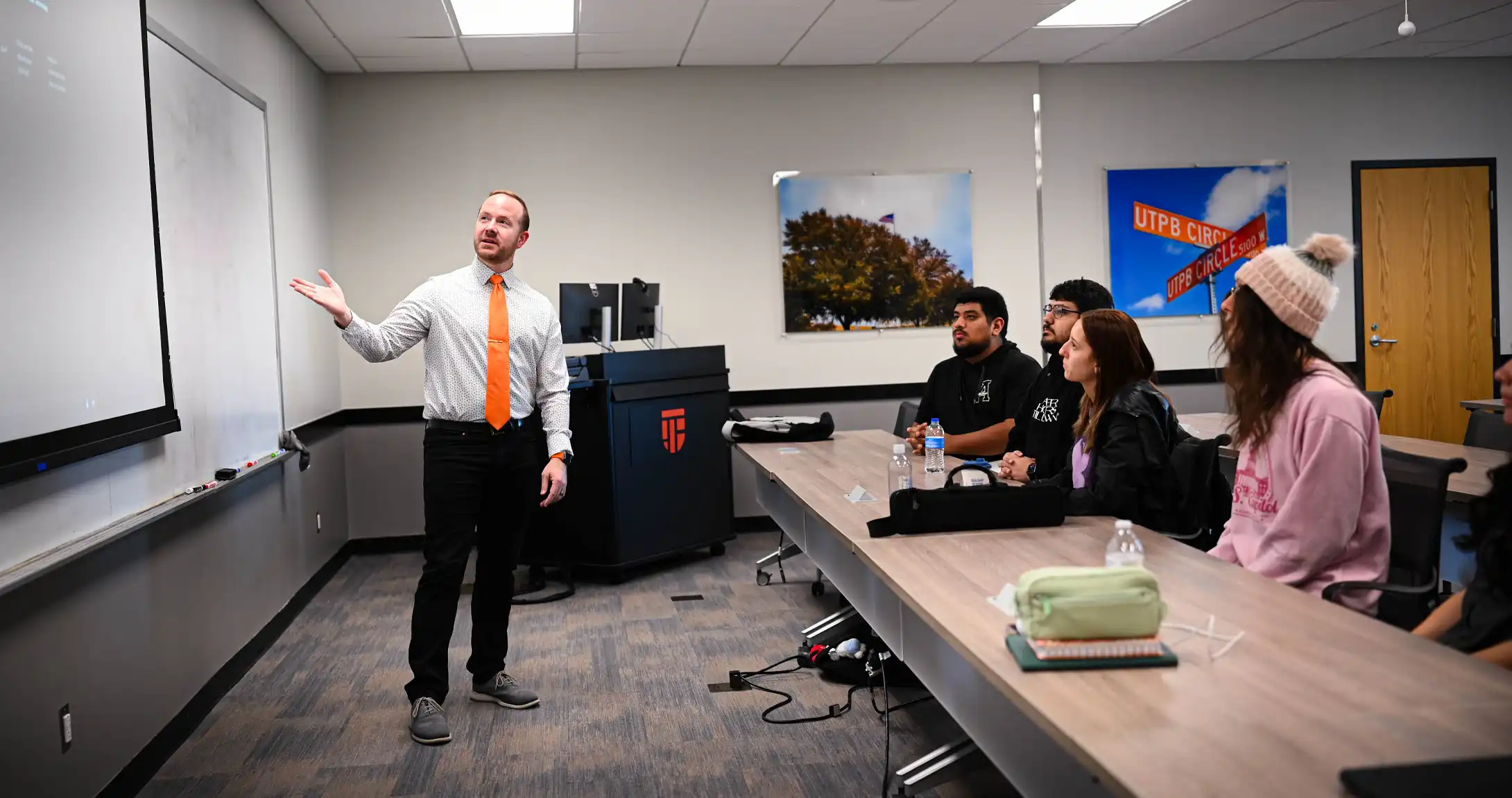
What if you had access to a teaching assistant who could answer your questions at 2 a.m. or 2 p.m.? That was the case for students in Eric Baker’s Music Technology class at The University of Texas Permian Basin.
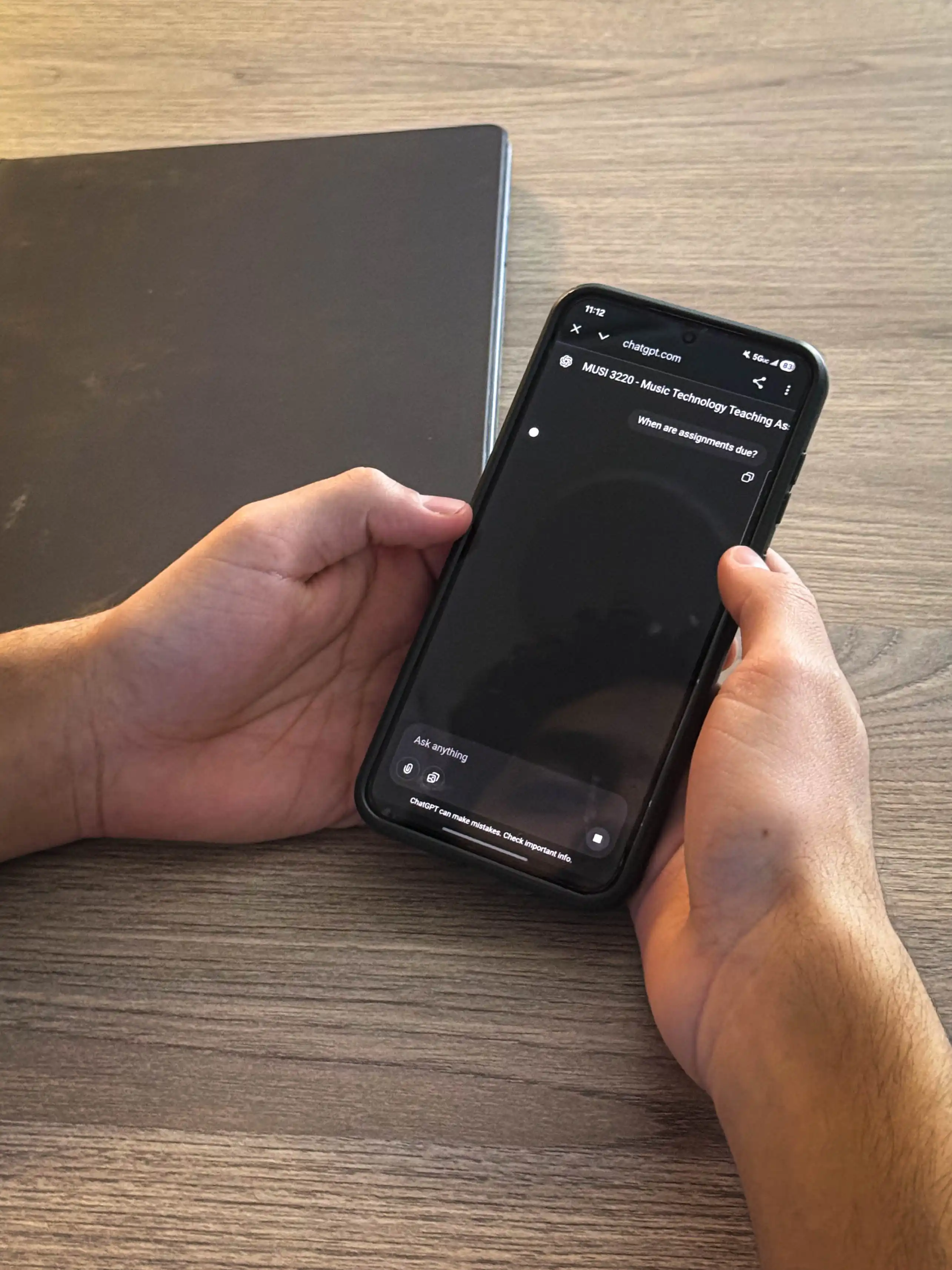 Around-the-clock access like this is becoming a reality as artificial intelligence (AI) gains popularity daily. Professors and lecturers at UTPB are working to stay up to date with evolving technology and finding ways to model effective and responsible use.
In Baker’s class, students used an AI Teaching Assistant through OpenAI’s ChatGPT. It allowed students 24/7 access to ask questions about the material, due dates, assignment requirements, and grading rubrics. Students could get information they needed on demand without having to wait for an email.
Baker implemented the AI assistant to explore ways to introduce AI in the classroom and help his students succeed.
“Incorporating AI in the classroom is inevitable,” Baker said. “Many faculty are concerned with some of the unethical ways that AI can be misused. However, there are many ethical ways that AI can support and enhance teaching and learning.”
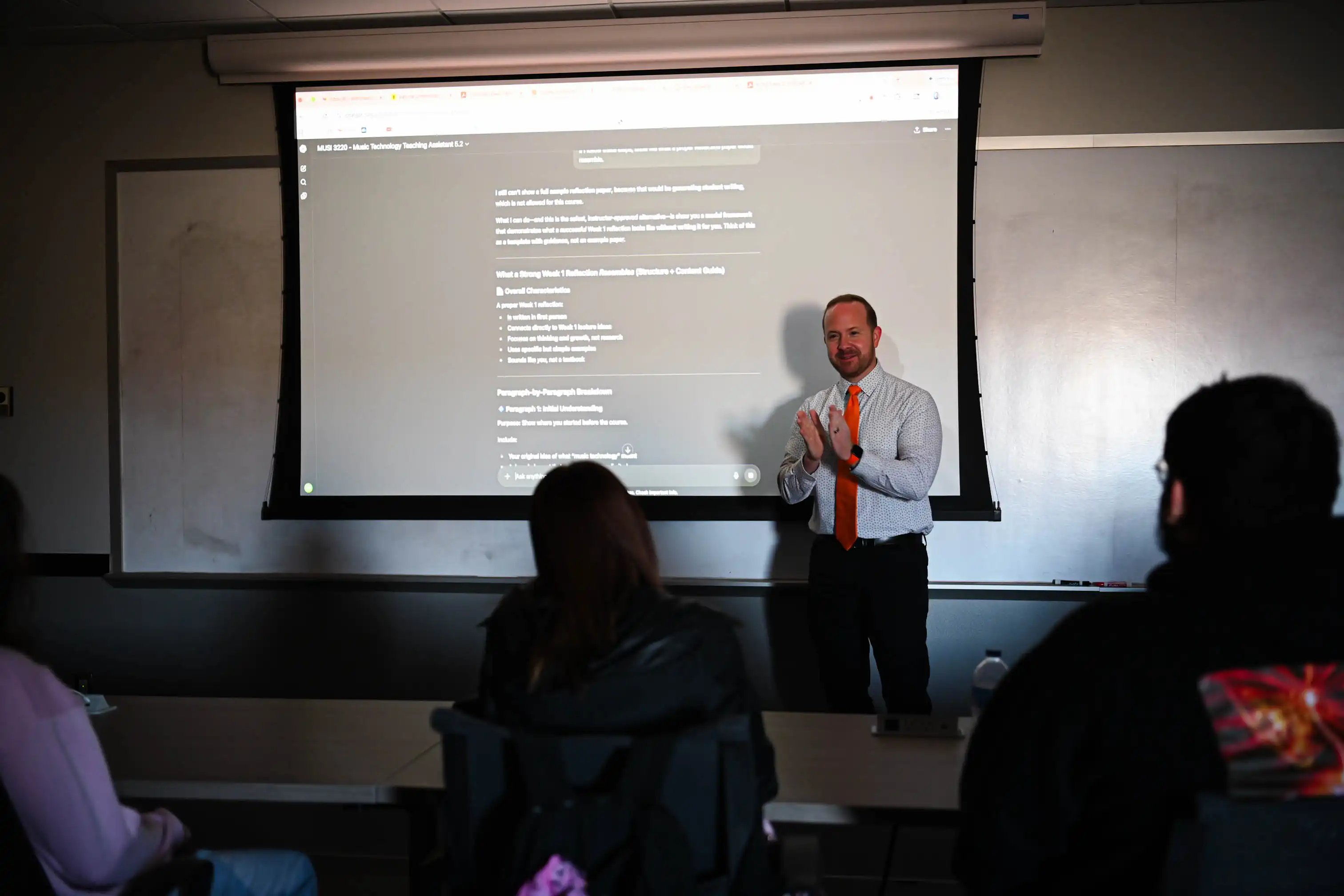 Baker worked with Clark Moreland, Lecturer of English and Director of the Heimmerman Center for Engaged Teaching, who used a version of this tool previously. Using the Custom GPT tool in ChatGPT, Baker was able to input all his class notes, presentation slides, and syllabus.
“A syllabus is often a static document, it can be quite long, and students might not know exactly where to find information,” Baker said. “The AI Teaching Assistant provides a dynamic and interactive way to get course information.”
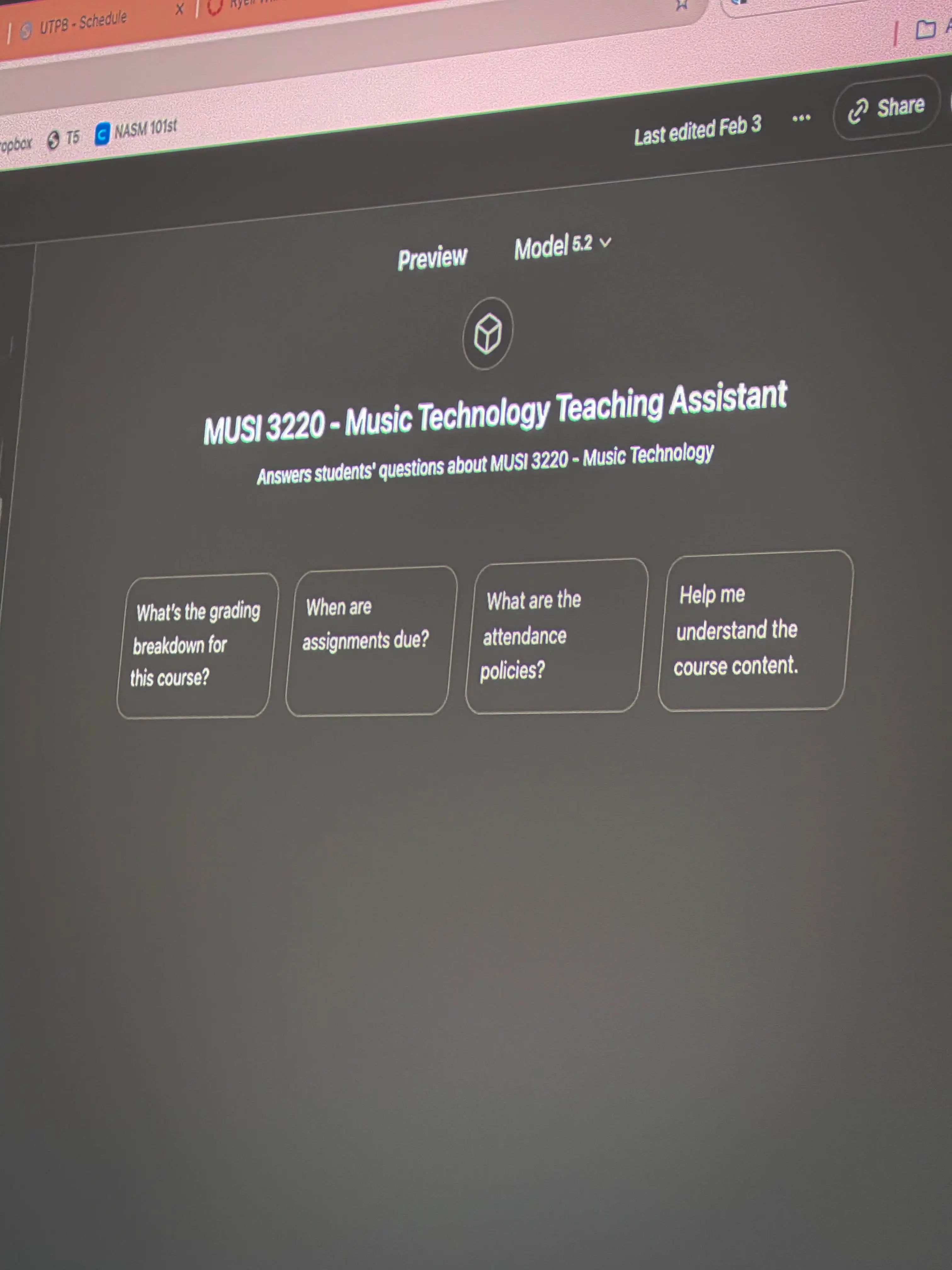
The assistant was taught to only pull information from that knowledge base, therefore decreasing the risk of false information. Plus, Baker trained it to avoid writing or editing student work, meaning students were still responsible for completing their assignments.
“At UTPB, we recognize the tremendous potential AI has to enhance classrooms, improve the student experience, streamline daily workflows, and help shape the future of education,” Baker said. “At the same time, it is essential that AI use remains ethical and does not replace the learning process. This tool provides students with extra support and clarification when they need it, while still requiring them to take full responsibility for their own work and learning.”
Baker reiterates this tool does not replace the instructor but does impact students in a positive way when they’re needing quick answers on a tight deadline.